
Deep Sleep Hypnotherapy
Harmony Hypnosis LtdMedical
4.2147.00 Reviews
- Version
- 2.34
- Installs
- 10.00K
- Age Rating
- Everyone
Screenshots
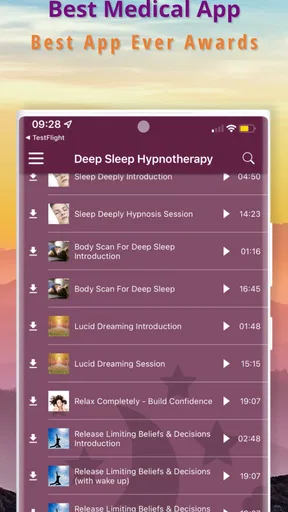
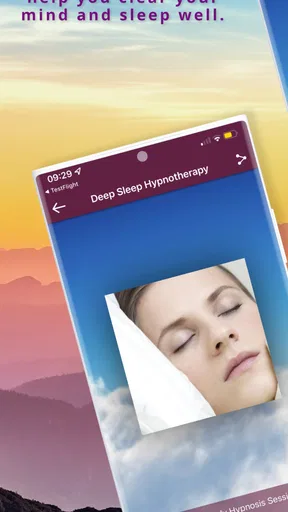
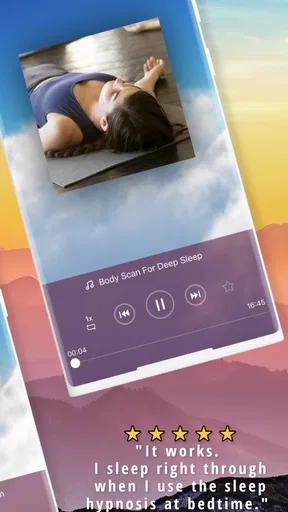
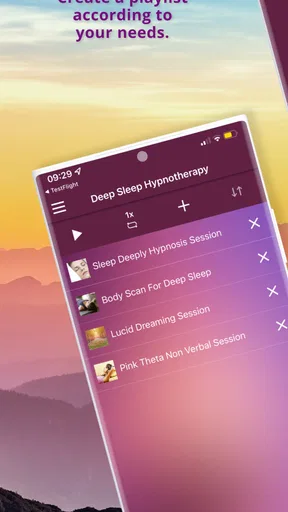
Our Review of Deep Sleep Hypnotherapy
 Analysis by Appyee
I approached Deep Sleep Hypnotherapy as a medical-category relaxation app rather than as a general entertainment product. Its purpose is straightforward: use hypnotic meditation to help me settle down, slow my thoughts, and move toward sleep. That focus makes it appealing when I want something quieter than a video, less interactive than a game, and more guided than simply lying in bed with the lights off.
After spending time with it, my main impression is that the app works best as a repeatable bedtime routine. It is not a diagnostic tool, a replacement for professional care, or a magic solution for every kind of insomnia. Its value comes from creating a familiar transition between an active day and rest. For people who respond well to a calm spoken guide, that can be genuinely useful. For others, especially anyone who dislikes hypnosis-style narration or needs detailed sleep tracking, the experience may feel limited.
How the experience feels in everyday use
I find the most useful way to judge this kind of sleep app is by asking whether its guided approach can become a calm, repeatable cue rather than another thing to manage. In this section, I’ll focus on how that audio-led routine fits into ordinary evenings and what can make it easier—or less comfortable—to use.
Readability and navigation at bedtime
One of the practical strengths of a sleep app is that it should not demand much attention when I am already tired. Deep Sleep Hypnotherapy is easier to approach than a crowded wellness platform because its identity is clear from the start: it is centered on deep-sleep meditation. I do not need to browse through a large library of unrelated workouts, recipes, mood tools, or social content before deciding what to do.
That simplicity matters for people who experience mental fatigue, reduced concentration, or visual discomfort late at night. A bedtime routine should involve as few decisions as possible. I found the app most comfortable when I selected a session before getting fully settled, then treated the phone as a tool to start the routine rather than something to keep checking.
The store short description, “Deep Sleep,” is brief, but it accurately sets expectations about the intended use. This is not an app I would open for a quick burst of daytime productivity. Its language and purpose point toward winding down, which makes it easier to understand for someone who wants a direct sleep aid instead of a broad self-care platform.
There is also a useful distinction between readable content and genuinely low-effort navigation. Even if a screen is visually clear, a tired user may still struggle with small controls, changing brightness, or remembering where a session begins. My advice is to prepare the app while I am still alert, keep the phone at a comfortable distance, and avoid turning the bedtime process into a second task list.
What the audio-led format offers
The central appeal is the guided hypnotic meditation. Instead of asking me to follow moving graphics or read instructions, the experience is built around listening. That can support people who find visual material tiring, including users with limited vision or those who simply prefer to keep their eyes closed. It also suits anyone whose attention wanders during silent meditation and benefits from a steady verbal presence.
At the same time, audio is not automatically accessible to everyone. A person with hearing loss, auditory processing difficulties, or a strong preference for text may not receive the same benefit from a spoken sleep session. The app’s concept is therefore inclusive in one direction but not universal. I would not choose it as my first option if I needed captions, transcripts, visual alternatives, or highly adjustable presentation.
Another subtle point is that hypnosis depends on comfort and trust. Some listeners relax quickly when a calm voice gives them a sequence to follow. Others become more alert because they are evaluating every phrase, resisting the idea of hypnosis, or worrying about whether they are doing it correctly. In my experience, the best way to judge the fit is to try it on an ordinary low-pressure evening rather than expecting it to solve a particularly difficult night immediately.
Motor and sensory considerations
Deep Sleep Hypnotherapy can be a good match for someone who wants minimal physical interaction. Once a session is ready, the user can rest instead of tapping through exercises, holding a posture, or completing repeated check-ins. That makes the format potentially comfortable for people with limited dexterity, hand fatigue, tremor, or pain that makes extended phone use unpleasant.
The same low-interaction design can help users who find complex gestures or dense controls frustrating. A sleep routine should not require precise swipes when the room is dark and the user is already lying down. I still recommend setting up the device before turning off the lights, because any app used in bed can become awkward if I need to reach across a nightstand or repeatedly wake the screen.
Sensory sensitivity deserves more attention than a simple “relaxing” label suggests. A voice, pacing style, or background sound that feels soothing to one person may feel intrusive to another. People who are sensitive to repetitive speech, certain tones, or unexpected changes should test the experience at a low volume and stop if it increases tension. The goal is not to endure the session; the goal is to make falling asleep easier.
For users with tinnitus, sound sensitivity, or a shared bedroom, headphones may seem like the obvious solution, but they are not comfortable or suitable for everyone during sleep. A speaker can be more practical but may disturb another person. This is one of the app’s real situational trade-offs: the audio format reduces visual effort, yet it makes the listening environment important.
Using it in different situations
The most realistic use case for me is a familiar evening: I have finished work, my mind is still replaying conversations, and I know that scrolling will keep me awake. I can put the phone aside, start a guided session, and let the narration provide a boundary between “still processing the day” and “ready to rest.” That is where the app feels more useful than opening a general video platform, where recommendations and notifications can easily pull me away from sleep.
It may also suit people with irregular routines, such as shift workers or students whose bedtime changes. The app does not need to be tied to a conventional nighttime schedule; the same wind-down approach can be used before daytime sleep, provided the surrounding environment is dark and quiet enough. For someone who travels, a familiar audio routine may be more dependable than relying on a new hotel room to feel restful.
However, situational access is not only about the user. A shared bedroom creates a practical problem, and a noisy home can make spoken guidance difficult to follow. If children, partners, roommates, or pets are likely to interrupt, the session may not have enough uninterrupted space to work well. In those circumstances, a silent relaxation technique or a sleep aid designed around vibration may be more appropriate.
I would also be cautious about using any sleep audio while driving, cycling, or doing work that requires attention. The app belongs in a safe rest setting. Its calming purpose is an advantage in bed, but the same quality makes it unsuitable when I need to remain alert.
What the developer and pricing model mean for access
Deep Sleep Hypnotherapy comes from Harmony Hypnosis Ltd and is available as a free app, which lowers the barrier for someone who wants to test the approach without paying upfront. That is important for users who are unsure whether hypnosis will suit them. The app is rated for Everyone, so its general presentation is intended for a broad audience rather than a narrowly defined age group.
There are in-app purchases ranging from $9.99 to $49.99 per item. That changes the decision for people who want a completely free, long-term sleep resource. I would begin with the accessible part of the experience and decide whether it earns a place in my routine before considering any purchase. A free download is not the same as unlimited free access, so users should pay attention to the purchase prompts and avoid assuming that every element will remain available without payment.
The app has a 4.2 average from around 500 ratings, with over 100 written reviews and more than 10 thousand installs. Those figures suggest that it has found a real audience, but they should not be treated as proof that hypnosis will work for every sleep problem. Ratings are useful for establishing that people are using and evaluating the app; they cannot predict how a particular voice, pace, or method will affect an individual listener.
Its current version is 2.34, and it supports devices running Android 7.0 or later. That broad compatibility is helpful for people who keep an older phone as a bedside device. It also means I would not need a recent flagship handset simply to try the app. Still, older devices can have their own practical issues, such as battery wear, speaker quality, or a screen that is difficult to dim comfortably.
Remaining barriers I would take seriously
The biggest barrier is that the app’s method is specialized. Hypnotic meditation is not the same as cognitive behavioral therapy for insomnia, medical assessment, or a personalized treatment plan. If my sleep difficulty continued for weeks, affected daytime functioning, or came with symptoms such as breathing problems or severe mood changes, I would look for professional advice rather than relying on an audio session.
Another limitation is the likely dependence on personal response. Some people need silence, while others need a neutral ambient sound. Some relax when instructions become more suggestive, while others feel uncomfortable or distracted. There is no universally correct sleep voice. A user who wants extensive customization, sleep-stage data, a smart alarm, or a detailed record of nightly patterns may prefer a dedicated sleep-tracking service instead.
Accessibility can also be undermined by the phone itself. Bright screens, notification sounds, accidental touches, and an inconvenient charging position can all interfere with rest. I recommend enabling a bedtime or do-not-disturb setting, reducing the display brightness before starting, and placing the device where it can be heard without requiring repeated handling. These are not special features of the app, but they determine whether the app is pleasant in practice.
People with limited hearing should consider whether the spoken format is usable for them before paying for additional material. People with visual impairments may appreciate not having to watch the screen, but they may still need a device setup that works with their preferred accessibility tools. Users with motor limitations may benefit from fewer interactions, yet could still need help with the initial launch, volume, or purchase controls. The app can reduce some barriers without removing all of them.
How it compares with familiar alternatives
Compared with a free video or audio platform, Deep Sleep Hypnotherapy offers a more focused purpose and less temptation to browse unrelated content. The trade-off is variety. General platforms provide countless voices, music styles, and ambient recordings, while this app is specifically built around hypnotic meditation. If I already know that hypnosis helps me, the focused format is an advantage. If I am still experimenting, a broader service may make comparison easier.
Compared with a standard meditation app, this experience is more narrowly aimed at sleep and uses hypnosis as its defining approach. A general meditation app may be better for someone who wants breathing exercises, daytime stress management, or short sessions for different moods. Deep Sleep Hypnotherapy makes more sense when my main question is, “Can a guided hypnotic routine help me settle at bedtime?”
Compared with clinical sleep support, it is more convenient and less demanding, but also less comprehensive. It can be a gentle first step for occasional difficulty winding down. It should not be my only plan when sleep problems are persistent, medically complicated, or connected to medication, pain, anxiety, or breathing issues.
My inclusive verdict
I recommend Deep Sleep Hypnotherapy to adults who enjoy spoken guidance, want a simple bedtime ritual, and prefer listening with their eyes closed over reading or interacting with a screen. Its free entry point, broad device support, and focused medical-category purpose make it easy to try. I especially see value for people who need help creating a consistent transition away from evening stimulation.
I would skip it if I need captions, extensive text controls, advanced sleep tracking, silent exercises, or a clinically structured insomnia program. I would also avoid treating the hypnotic format as universally calming. The right response is personal: if the narration makes me feel more settled after several ordinary attempts, it may be worth keeping; if it creates resistance or sensory discomfort, another approach is better.
My practical recommendation is to test it as part of a controlled routine: prepare the phone before bed, remove distracting notifications, keep the volume comfortable, and give the session enough quiet space to work. Do not judge it only by whether I fall asleep instantly. I would also notice whether I feel less mentally activated, whether I reach for the phone less often, and whether the routine is easy to repeat.
Overall, this is a focused and approachable option rather than a complete sleep-management system. Its strongest quality is the low-effort, audio-centered path from wakefulness toward rest. That makes it potentially supportive across several abilities and living situations, but only when the listener can comfortably engage with hypnosis and spoken audio. For the right user, it can become a useful nightly cue; for everyone else, its narrow method and purchase structure are reasons to look elsewhere.
Verdict
Strengths of Deep Sleep Hypnotherapy
- Calming narration helps create a relaxing bedtime routine.
- Useful for users who prefer guided audio over silent meditation.
- Sessions can be played with the screen locked.
- Simple interface makes bedtime playback easy to start.
- May help reduce bedtime distractions through focused listening.
Limitations of Deep Sleep Hypnotherapy
- Results vary and may require consistent nightly use.
- Some listeners may dislike the narrator’s voice or pacing.
- Audio sessions may become repetitive over time.
- Requires headphones or a quiet environment for best results.
- Should not replace professional care for serious sleep problems.
Similar Picks in This Category
View All
WebMD: Symptom Checker
WebMD, LLC4.1

Microphone Amplifier
DOSA Apps4.2

Anatomy Learning - 3D Anatomy
3D Medical OU4.5

Period Tracker and Calendar
SimpleInnovation4.9

GoodRx: Prescription Coupons
GoodRx4.8

CVS Health
CVS Pharmacy4.5
Frequently Asked Questions
What is Deep Sleep Hypnotherapy, and how does it work?
Deep Sleep Hypnotherapy is designed to help users relax before bedtime through guided hypnotherapy, calming narration, breathing prompts, and sleep-focused audio sessions. After trying the available content, I found that the experience is intended to quiet racing thoughts and establish a soothing nighttime routine rather than act as an instant sleep cure. Results can vary depending on stress levels, sleep habits, and personal responsiveness to hypnosis.
Can Deep Sleep Hypnotherapy really help with insomnia or poor sleep?
The app may support relaxation and make it easier for some users to fall asleep, especially when occasional stress or an overactive mind is the main problem. However, it should not be considered a medical treatment for chronic insomnia, sleep apnea, depression, or other health conditions. Consistent use, a comfortable sleeping environment, and good sleep habits are important, and persistent sleep problems should be discussed with a qualified healthcare professional.
Is Deep Sleep Hypnotherapy safe for everyone to use?
Most adults can generally listen to relaxation or sleep-hypnotherapy recordings safely while resting in bed, but the app is not suitable for every situation. Do not use it while driving, operating machinery, or doing anything that requires attention. People with certain mental health conditions, a history of seizures, or concerns about hypnosis should seek professional advice before using it. Stop listening if the content causes discomfort, anxiety, or unusual reactions.
Does Deep Sleep Hypnotherapy require an internet connection or a subscription?
Access requirements can depend on the version of the app, your device, and the specific session you want to use. Some recordings or features may be available for free, while additional programs, longer sessions, or premium content may require an in-app purchase or subscription. Before downloading, check the current App Store or Google Play listing for pricing, trial terms, offline availability, advertisements, and cancellation conditions.
How should I use Deep Sleep Hypnotherapy for the best results?
For the most comfortable experience, choose a session shortly before bedtime, lower the screen brightness, use headphones only if they are comfortable and safe, and place your device where it will not disturb your sleep. Listen in a quiet, familiar environment and avoid expecting immediate results after one session. Using the app consistently as part of a regular bedtime routine is usually more helpful than listening only when sleep problems become severe.
